
Does My Puppy Need Obedience Classes? What Every New Owner Should Know

Most new puppy owners arrive at a similar moment about two weeks after bringing their dog home. The biting is constant, the recall does not exist yet, and patience is beginning to thin. Whether puppies need obedience classes is one of the most common questions we hear, and the honest answer is that it depends on the puppy, the owner, and what kind of life you are building together. What does not depend on any of those things is the need for training itself. Every puppy needs it, but the format is a decision that needs to be made early on.
Why Puppy Training Starts Before the First Class
A puppy does not arrive home as a blank slate. From the moment they are born, they are forming associations with people, sounds, surfaces, and routines that will shape how they respond to the world for the rest of their lives. By the time a puppy reaches eight weeks old and is ready to come home, a meaningful amount of that foundational learning has already taken place. Whether the foundation is solid depends largely on what happened during those first weeks with the breeder.
What a Reputable Breeder Has Already Started
Posh Puppies Indiana has been raising, handling, and socializing puppies for over 20 years, and that work begins long before a puppy is placed in a new home. Puppies raised in a thoughtful breeding program are handled daily from birth, introduced to a variety of sights and sounds around the house, and exposed to the kinds of consistent human contact that build confidence and comfortability rather than fear. The American Veterinary Society of Animal Behavior states that the primary and most important time for puppy socialization is the first three months of life, and that breeders, new owners, veterinarians, and trainers all share responsibility for making that window count.
The Training Your Puppy Carries Home
Early handling is not just about temperament. A puppy that has been examined, held, and introduced to petting, brushing, bathing, and light leash pressure before leaving the breeder arrives at their new home with several advantages already in place. They are less likely to panic at a vet visit, more tolerant of grooming, and more capable of adjusting to the novel environments a training class will eventually ask of them. That foundation makes what comes next more effective.
What Age Should Puppies Start Obedience Class?
Most puppies are ready to start a formal puppy socialization or obedience program between 7 and 16 weeks of age, with many well-run programs accepting puppies as young as 7 to 8 weeks after their first round of vaccines. The timing of this decision matters more than most new owners realize, and the reason comes down to a developmental window that closes swiftly.

The Socialization Window (and Why It Closes Faster Than You Think)
The critical socialization period in puppies runs from birth through approximately 16 weeks of age. During this window, the puppy brain is uniquely receptive to new experiences and forms the associations that will impact how the dog responds to people, other animals, and unfamiliar environments for the rest of its life. The American Veterinary Society of Animal Behavior has stated that it should be the standard of care for puppies to receive socialization before they are fully vaccinated, because waiting until the vaccination series is complete often means waiting until that window has already passed. Once those 16 weeks close, the associations formed during that period become progressively more fixed and harder to reshape.
You Don’t Need to Wait Until Your Puppy is Fully Vaccinated
The instinct to wait until all shots are done before exposing a puppy to other dogs is understandable, but the research does not support it as the safer choice overall. The peer-reviewed study published in the Journal of the American Veterinary Medical Association, called the JAVMA socialization study, found that puppies who attended a structured six-week socialization class were significantly more likely to respond positively to strangers than puppies who attended no class or only a standard obedience course. The behavioral cost of missing the socialization window is often harder to reverse than any risk associated with attending a well-run class that requires proof of vaccination before enrollment. A good program will have vaccination requirements in place precisely because the safety of the environment is what makes early class participation responsible rather than reckless.
What Do Puppies Learn in Obedience Class?
A well-run puppy class teaches far more than sit and stay, and the best puppy programs combine structured skill-building with the kind of social and environmental exposure that simply cannot happen in a living room.
The Basic Commands Worth Teaching First
The commands with the highest daily value for a new puppy are also the most practical: sit, stay, come, leave it, and loose leash walking. These five form the foundation of a safe, manageable relationship between owner and dog across every context they will share. PetMD’s puppy training guide notes that basic obedience training is essential, not just for good manners, but for the puppy's physical safety as well. Reliable recall and solid leave-it responses can prevent your puppy from harm in real-world situations. The earlier these commands are introduced with consistency and reward-based methods, the more reliable they become when they are needed most.
Beyond Commands: What Puppy Classes Teach That Home Training Cannot
Knowing how to sit in the kitchen is a very different skill from knowing how to sit when a stranger walks into the room or another dog starts barking at your pup. A structured puppy class provides something at-home training cannot replicate: a controlled distraction environment where the puppy learns to focus on their owner while unpredictable things happen around them. In class, puppies also practice accepting handling from unfamiliar people and run-ins with other dogs, which builds the tolerance needed for vet visits and grooming appointments. Veterinary professional Dr. Jennifer Summerfield has written about the distinction between puppy kindergarten and traditional obedience class, noting that the most important early lessons focus on building confidence and teaching the puppy that the world is a safe place, a foundation that makes every subsequent training goal easier to reach. Command reliability follows confidence, not the other way around.
The Best Training Methods That Work
Not all training approaches are equal, and understanding the basics of how dogs learn is one of the most practical tools a new owner can have. It helps with choosing better trainers, practicing more effectively at home, and recognizing approaches that could do more harm than intended.

Positive Reinforcement: The Science Behind the Treat
Positive reinforcement training works by rewarding behavior you want in order to make that behavior more likely to happen again. PetMD describes it as the only scientifically backed method of puppy training, and that distinction matters when evaluating any class or trainer. The American Kennel Club explains that dogs trained with aversive tools such as shock collars, prong collars, or leash corrections often form negative associations with the trainer and the training environment itself, eroding the bond that makes learning possible in the first place. A puppy nervous about training sessions is not a puppy that learns well, and that pattern is far more common with punishment-based approaches than most owners expect.
Classical Conditioning and Why Your Puppy Is Already Learning
Beneath the visible layer of commands and rewards, a second type of learning is running constantly. Classical conditioning, also known as Pavlov conditioning, is the process by which a puppy forms automatic associations between a neutral stimulus and a meaningful one. The AKC describes it plainly: when a doorbell rings, a dog gets excited because they have learned to associate that sound with what follows. That same mechanism is active in your puppy throughout every waking hour. Every experience during the socialization window is being encoded as either safe or threatening, familiar or alarming, and those associations do not require deliberate training to form. This is precisely why the environment and handling practices during the first 16 weeks carry consequences that extend far beyond puppyhood, and why what a thoughtful breeder does in those early weeks shapes the dog the owner then works with.
What to Work On at Home Before and Between Classes
The owners who get the most out of formal puppy class are the ones who show up having already built some basic routines at home, and who are devoted to continuing lessons from classes within the rules of their house. Puppy class builds on what the puppy already knows and helps equip owners with skills of implementing techniques in real-life situations. The more the foundation is in place before the first session, the faster and more durable the learning from class becomes.
Building a Puppy’s Potty Training Routine
Potty training is less about technique and more about consistency. The core principle is straightforward: take the puppy outside on a regular schedule, use the same spot each time, wait calmly, and reward immediately when they go. Puppies between 8 and 12 weeks have limited bladder control and need to go out after meals, after naps, and after exciting play sessions. Puppy pads can be a useful bridge for owners in apartments or situations where outdoor access is limited during those first days, but they also teach the puppy that ‘handling business’ inside is acceptable, which creates a contradiction to resolve later. A doggy door is a longer-term convenience that works well once the puppy understands where the right spot is, but it cannot substitute for the supervised, rewarded outdoor routine in the early weeks. For a more detailed walkthrough of housebreaking methods and what to do when the process stalls, the Posh Puppies Indiana guide to housebreaking your puppy covers the practical steps.
Why Puppies Pull and How to Leash Train
Puppies are curious! New scents in different environments fight for their attention and they pull on the leash because no one has taught them not to. It is not defiance. It is curiosity and momentum from a dog that has never been given a reason to walk any other way. The solution for correction is redirection. VCA Animal Hospitals explains a reward-based training approach that works by reinforcing the behavior you want with something the dog values, such as a treat or physical affection, making that behavior more likely to repeat. For leash walking, that means rewarding the puppy every time they choose to walk at your side rather than pulling ahead. Starting this practice in low-distraction settings like your own yard or a quiet hallway, before moving to busier environments, sets the puppy up to succeed rather than asking them to learn a new skill and ignore competing stimuli at the same time.
Bite Inhibition: Teaching Your Puppy That Mouths Have Limits
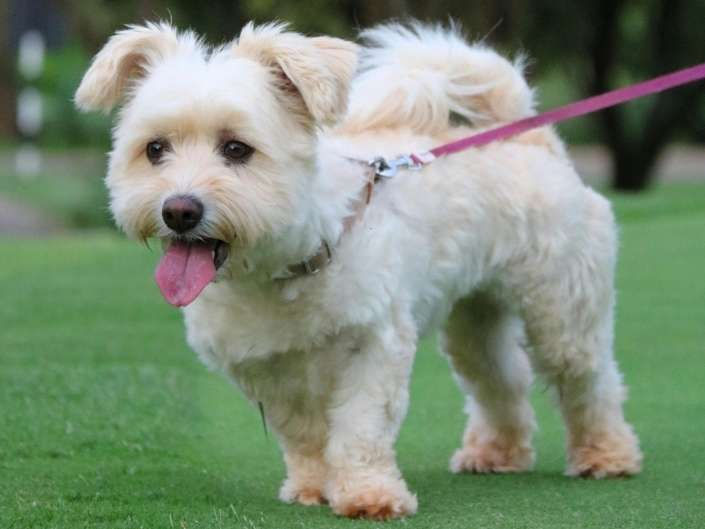
Every puppy bites. It is not aggression and it is not a character flaw. It is how puppies explore their littermates, how they initiate play, and how they test the world before they had any other tools to do it with. The goal at home is not to eliminate mouthing overnight but teaching the puppy bite inhibition; controlling the pressure of their bite is what keeps play going.
The best time to teach bite inhibition reliably closes around four to four and a half months of age. A puppy that learns to moderate bite pressure during this period carries that restraint into adulthood. The American Kennel Club notes that if a dog has learned bite inhibition, they understand not to bite down hard even in moments of fear or pain, which is exactly the situation where an untrained mouth becomes genuinely dangerous.
Practicing this at home is straightforward. When your puppy bites too hard during play, stop the game immediately and withdraw attention completely. No scolding, no pushing the puppy away, no reaction that the puppy could interpret as continued engagement. The play ends because the bite was too hard, and the puppy learns that hard bites are what cause their favorite thing to disappear. They need to learn that their mouths are for communicating through gentle use. Repeat that consequence consistently across every member of the household and the lesson builds quickly.
Redirection is the second tool in the sequence. Keep a chew toy within reach during every play session so you can place it in the puppy's mouth the moment mouthing starts. The toy becomes the appropriate outlet for the behavior, and offering it before the puppy escalates keeps the interaction positive rather than reactive. If biting continues or intensifies after consistent at-home work, a puppy class or private trainer can observe the pattern in real time and adjust the approach to the specific dog.

Choosing Between Obedience Classes, Private Training, or DIY
The right training approach depends on the dog in front of you, the household you are managing, and the specific challenges you are trying to solve. There is no universally correct answer, and any resource that insists otherwise is not accounting for the full range of real puppies and real owners. Oftentimes, the best idea is a combination of methods that fit within your budget.
When Obedience Classes Are the Right Choice
Group puppy classes offer a controlled social environment where the puppy learns to focus on their owner while other dogs, people, and unpredictable stimuli are all present nearby. This approach can help achieve two goals at the same time: intentional work on a new skill or command, as well as winning the focus of your pup despite surrounding activity. Decision-based learning for dogs is one of the most valuable things a class provides, and it is what makes trained skills transfer to real-world situations outside the home.
Group programs are also the most cost-effective training option for most families and the accountability of a weekly session with other owners helps keep practice consistent. The American Kennel Club recommends looking for classes where the dogs look happy and engaged, the instructor is encouraging rather than overly corrective, and the facility feels well-managed and safe. A good group class is a relationship investment as much as a training one.

When Private Training Makes More Sense
Private training is the better choice when the puppy's specific situation makes a group setting counterproductive. A puppy showing early signs of fear, reactivity or aggression towards other dogs, or significant anxiety in new environments will often do worse in a group class before those issues are addressed individually. The environment that helps a confident, curious puppy learn to socialize further can overwhelm a fearful one. Private training is also worth considering for owners with scheduling constraints that make a fixed weekly class difficult, for households managing multiple dogs, or for situations where a specific behavior problem requires a tailored approach that a group curriculum cannot accommodate.
The Training Decision: When to Try It Yourself, When to Get Help
A practical framework helps clear the decision. Prioritize at-home training first for basic commands in low-distraction settings, potty training routine, leash introduction in your own yard, and early handling practice. Move to a group class when the puppy is between 8 and 16 weeks old and the socialization window is open, when structured guidance and peer accountability is desired, or when the puppy needs controlled exposure to other dogs. Consider a private trainer when the puppy shows persistent fear or avoidance responses, when group class has not produced meaningful progress after four to six sessions, or when you are not confident you are applying methods correctly. DogTime, drawing on guidance from Dr. Ian Dunbar, one of the architects of modern reward-based puppy training, notes that the developmental shift from puppyhood to adolescence can happen virtually overnight around four and a half months of age, and that owners who want the full benefit of formal class should enroll before that transition occurs.
What to Look for in a Puppy Trainer
The dog training industry in the United States has no mandatory licensing or regulatory oversight. Anyone can call themselves a trainer, open a class, and start working with puppies without any formal qualification. That reality makes knowing what credentials to look for one of the most important consumer skills a new puppy owner can develop.
The Credentials That Matter
The Certification Council for Professional Dog Trainers issues the CPDT-KA, which stands for Certified Professional Dog Trainer, Knowledge Assessed. This is the most widely recognized independent professional credential in the US training industry. Earning it requires candidates to document at least 300 hours of hands-on dog training experience, pass a comprehensive 200-question exam covering applied learning theory, canine behavior, instructional skills, and professional ethics, and agree to a formal standards of practice. Trainers who hold the CPDT-KA have their knowledge independently verified. The designation gives you something to verify and compare before you commit to a program.
Questions to Ask Before You Book A Class or Trainer
Before committing to any training program, ask whether you can observe a class without your puppy first. Watch how the trainer handles dogs that are struggling. Notice whether the dogs in class look engaged and relaxed or stressed and shut down. Ask directly whether positive reinforcement is the primary approach, what happens when a dog makes a mistake, and what the trainer-to-dog ratio is in group settings. Ask whether vaccination requirements are enforced at check-in, because a class that is not verifying vaccination status at the door is not managing health risk responsibly. None of these questions require special knowledge to ask, and unreasonable answers to any of them will tell you a great deal about where the program's priorities actually lie.
How the Training Your Puppy Already Has Gives Them a Head Start
The work that happens in the first eight weeks of a puppy's life does not disappear when the puppy comes home. It shows up in class. A puppy that has been handled daily, introduced to a range of sounds and surfaces, and started on a consistent routine arrives at their first training session with a fundamentally different baseline than one that spent those weeks with minimal human contact or environmental variety.
The American Veterinary Medical Association's research on puppy socialization makes clear that early socialization benefits are not one-time events. They require reinforcement across the first nine to twelve months of life to become fully durable and resistant to regression. What a reputable breeder begins is not finished when the puppy leaves the breeding home. It is a foundation the new owner continues building on every day. Understanding the 3-3-3 rule for your puppy’s adjustment timeline helps owners recognize when their puppy is ready to absorb more structured learning and when they still need time to decompress and settle.
If your puppy came home from Posh Puppies Indiana, they have already had their first exposure to handling, routine, and early socialization during their most receptive weeks. That head start is real, and it matters in class. If you are still looking for a puppy whose training foundation has already begun, take a look at our available puppies and ask us about our early training practices when you connect.
Frequently Asked Questions About Puppy Obedience Classes
Do puppies need obedience classes if I already train at home?
Home training and formal class solve different problems, and doing one well does not eliminate the value of the other. Training at home builds command reliability in familiar, low-distraction settings, which is a strong foundation. Class adds the socialization layer, the distraction-proofing, and the structured handling exposure that home environments rarely replicate. Canine behavior research published by the National Institutes of Health's journal system found that between 72 and 85 percent of pet dogs are estimated to exhibit at least one type of problem behavior during their lifetime, ranging from normal-but-unwanted habits like jumping to more serious anxiety-driven issues. Many of those dogs received some training. The socialization and distraction exposure that a structured class provides is what home training typically cannot match on its own.
What age is too late to start puppy obedience classes?
There is no age at which a dog cannot learn. The practical reality is that formal class becomes more effortful, not impossible, after the socialization window closes around 16 weeks, because behavioral patterns formed during that period are more established by then. For puppies that have already passed that window, focused work with a private trainer to address any emerging fear or reactivity before beginning a group class is often the right sequence. A 2024 report of shelter adoption data from Hill's Pet Nutrition found that 24% of individuals who had surrendered a pet cited behavioral or training problems as the primary reason for doing so, and that 94 percent of those who had considered surrendering chose to keep their pet after receiving behavioral support. As the old adage goes, better late than never!
How long do puppy obedience classes usually last?
Most puppy and basic obedience classes run between four and six weeks, meeting once a week for approximately one hour sessions. Some programs offer eight-week tracks that allow more time for each skill to develop before advancing. The class itself is only part of the equation. Daily practice between sessions, in short five to ten minute windows at home, is what makes trained behaviors durable rather than situational. A puppy that attends one hour of class weekly without reinforcement practice at home will progress at a fraction of the rate of one whose owner is working the same skills throughout the week.
Is private puppy training better than group classes?
Neither structure is universally superior. Each serves a distinct purpose, and the most effective approach for many puppies is to use both at different stages. Group class provides the socialization and distraction exposure that is genuinely hard to replicate in private sessions. Private training provides the individualized attention that helps address specific behavioral challenges and owner technique gaps that a group setting cannot pause to work on. For a puppy that is confident and socially comfortable, group class first is typically the more efficient route. For a puppy showing early fear or reactivity, private work to build confidence before entering a group setting is often the better sequence.
How do I know if a puppy trainer is qualified?
Ask for an independent credential, not just years of experience. The gold standard in the United States is the CPDT-KA designation issued by the Certification Council for Professional Dog Trainers. The credential requires 300 hours of documented hands-on training experience, a comprehensive exam, and continuing education to maintain. A searchable directory of certified trainers by location is available at ccpdt.org. Before booking any class, ask whether you can observe a session without your puppy. The behavior of the dogs in class will tell you more than any marketing material, because dogs that are stressed, shut down, or constantly jumping away from a trainer are giving you clear information about the environment they are working in.
Final Thoughts
For the average dog owner, training a puppy is not about producing a perfectly obedient dog. It is about building a relationship where the dog understands what is expected and trusts the person asking. Whether that happens through group class, private sessions, consistent training at home, or all three depends on the dog you have and the life you are building together. The decisions you make in the first few months carry more weight than almost anything that follows, and getting them right does not require perfection. It requires consistency, patience, and a willingness to ask for help when the situation calls for it.
Whether you are just bringing your new puppy home or are already a few weeks in and wondering what comes next, the team at Posh Puppies Indiana is here to help. Schedule a meet and greet and let us help you find a puppy that has been set up to learn.
This article was written by Peter Corso, reviewed by Ashlee Ryman, and published by Posh Puppies Indiana.

Comments