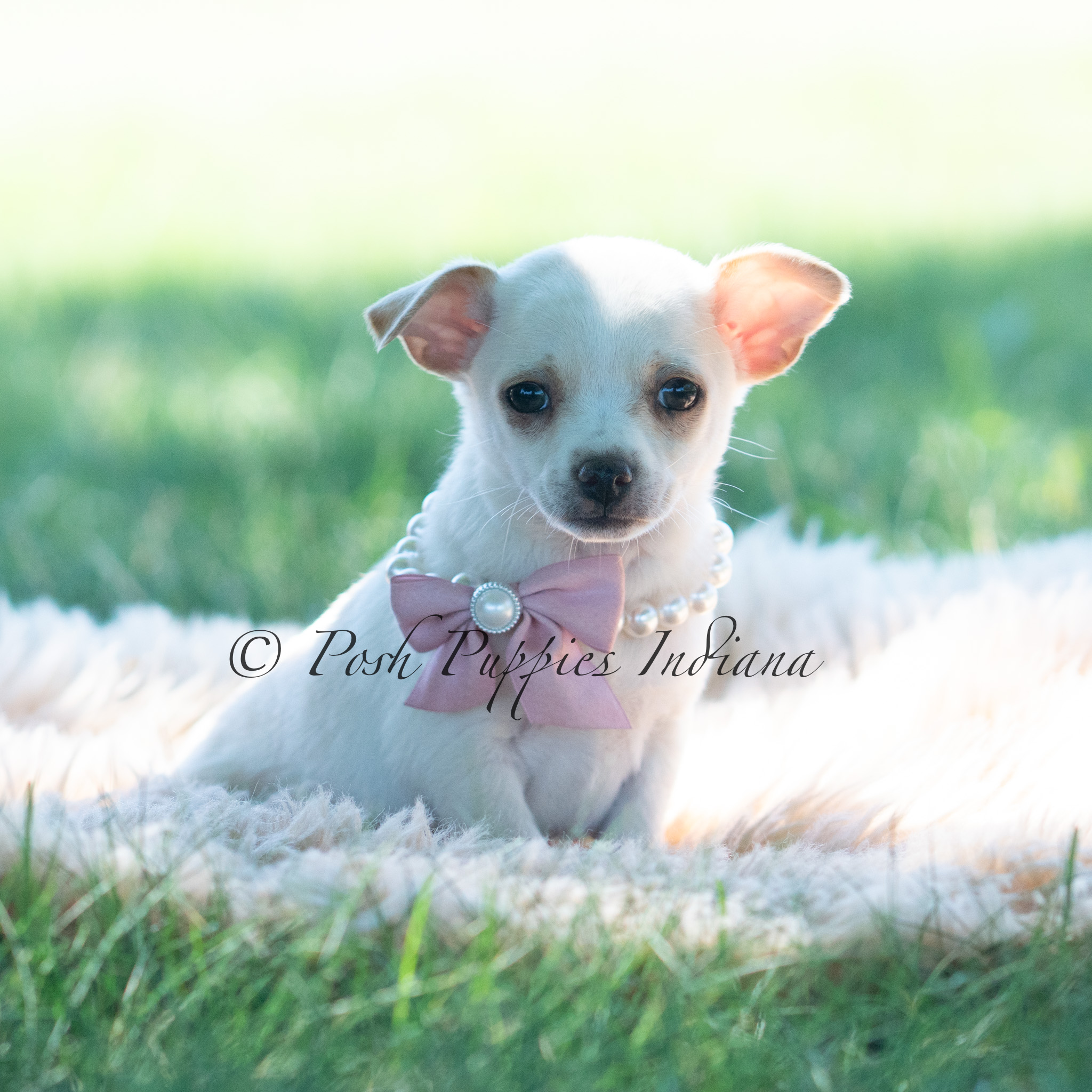
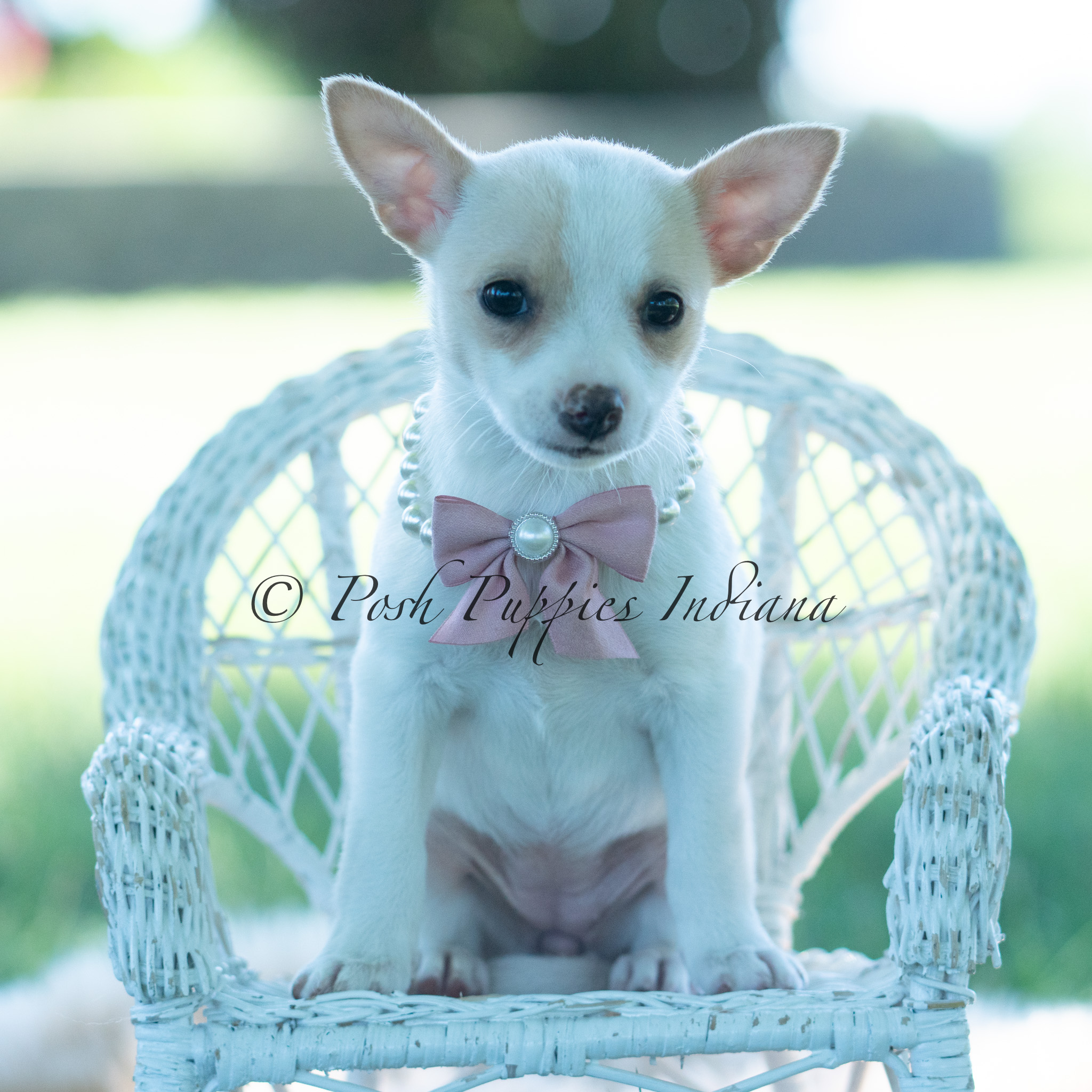
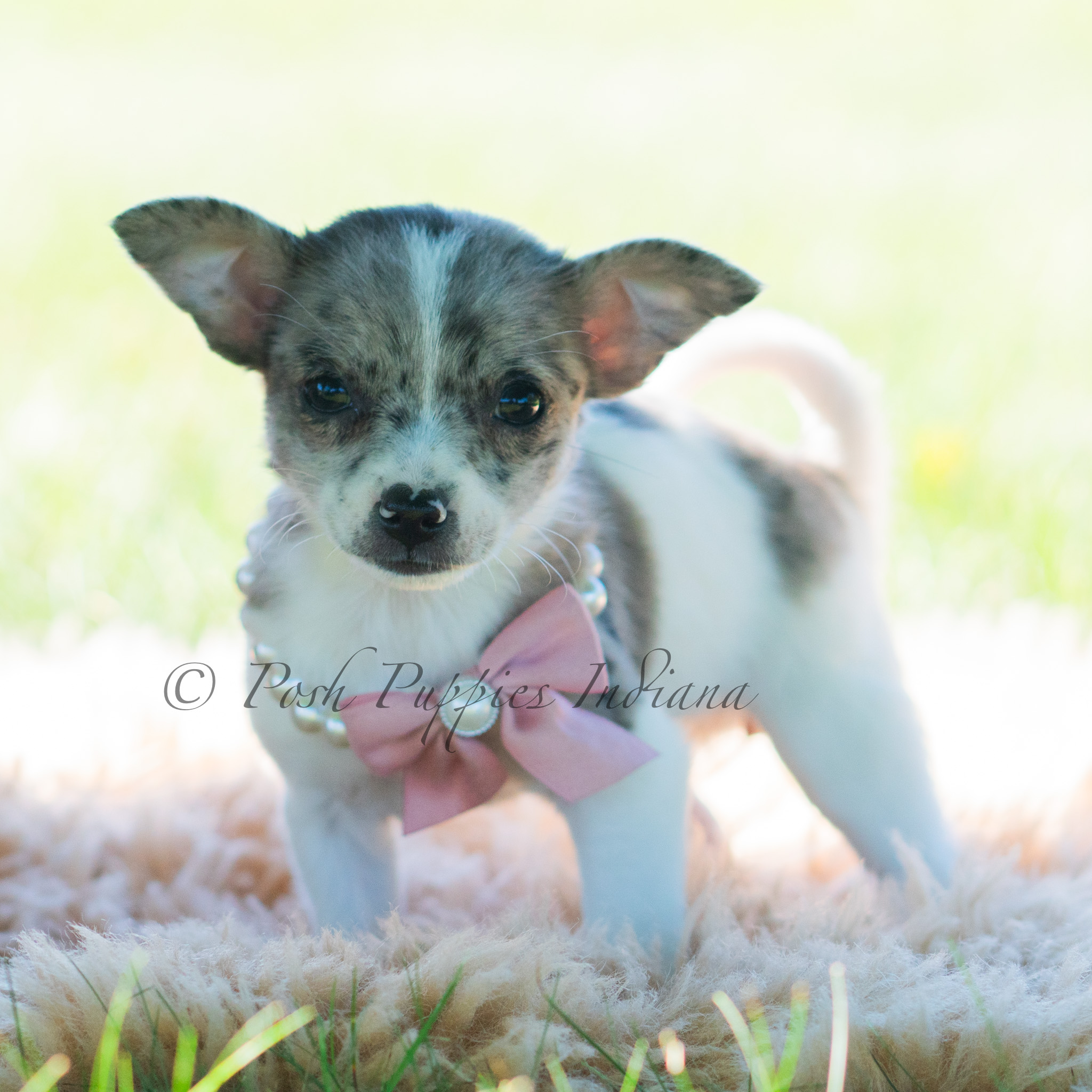
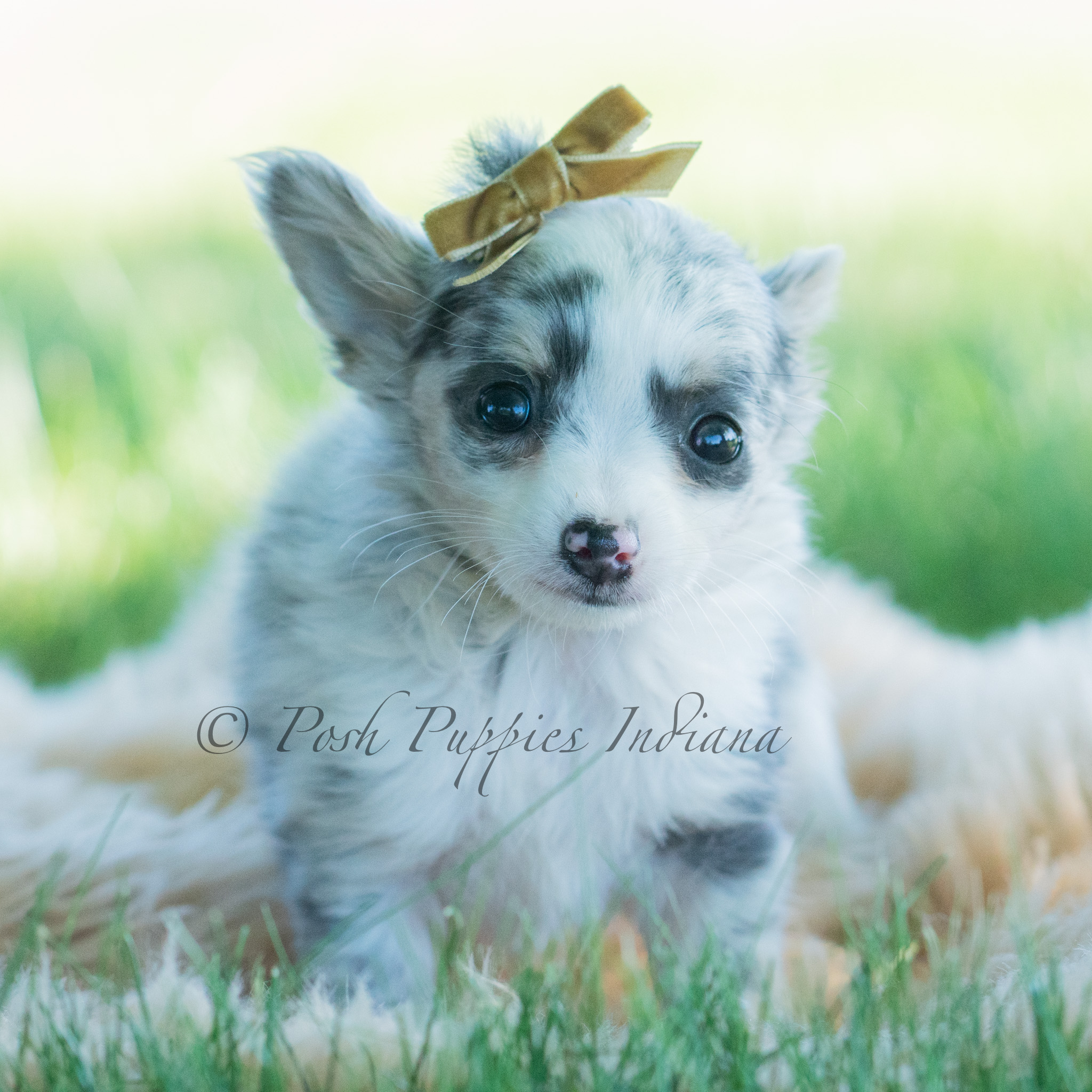
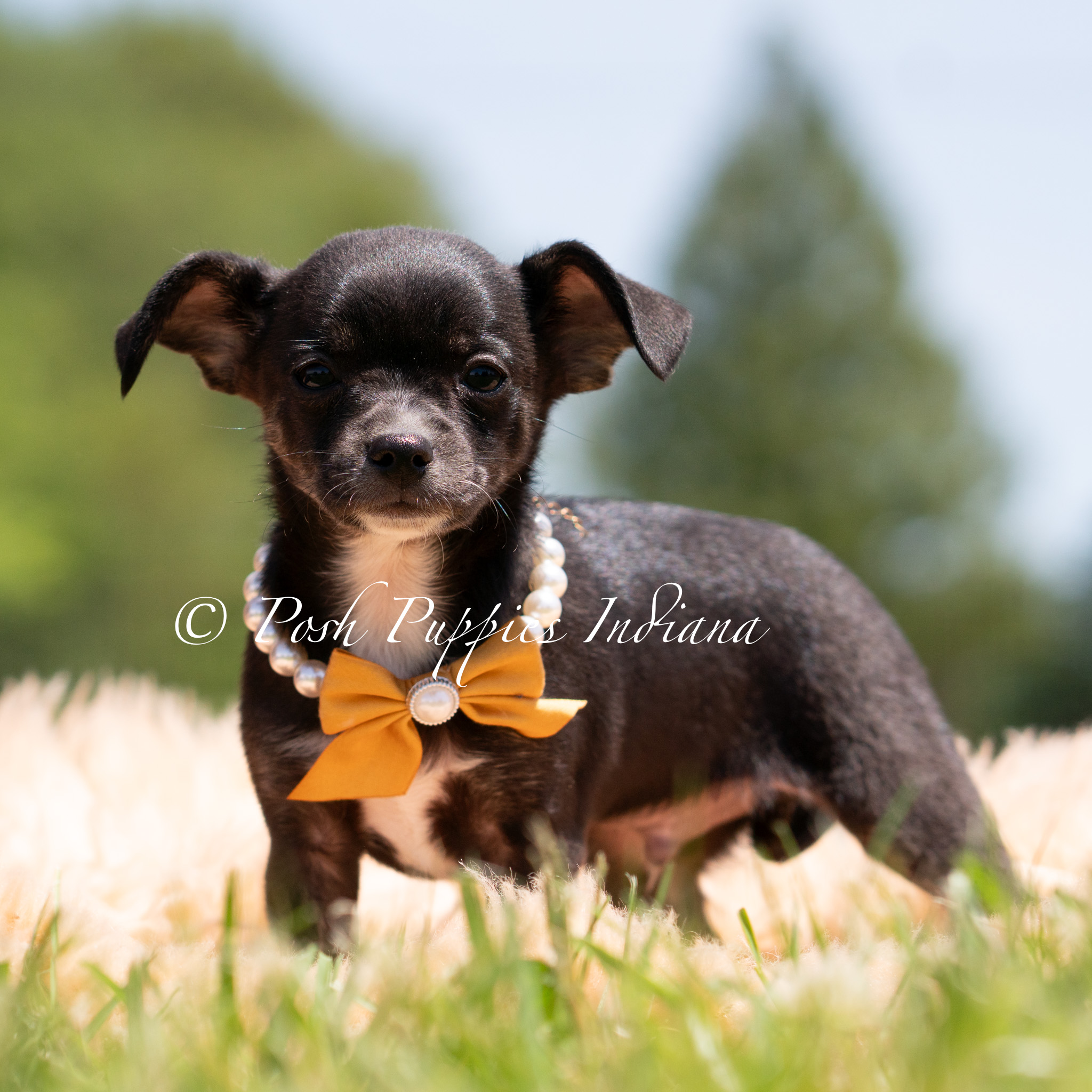
CHIHUAHUA PUPPIES FOR SALE
The Chihuahua is a small and lively breed known for its big personality. With their compact size, they have a confident and alert presence. Chihuahuas are loyal and can form strong bonds with their owners. They require regular exercise and mental stimulation. While generally healthy, they may be prone to certain health issues due to their size. Chihuahuas make wonderful companions, bringing joy and entertainment to their owners' lives. View our adoptable Chihuahua puppies for sale in Indiana below!
Chihuahua FAQs
Chihuahua puppies usually cost between $1,000 and $2,5000 from a reputable breeder. Breeders in Indiana and other parts of theMidwest often have lower pricing compared to Chihuahua breeders in high cost of living states like New York or California, making Indiana one of the better regions in the country to find a quality Chihuahua without overpaying. A Chihuahua puppy's cost can depend on pedigree, coat type, head type, color, and whether the parents carry OFA health certifications. Champion bloodlines and rare color patterns can push prices toward the higher end. One honest note: if a seller is advertising "teacup" Chihuahuas at premium prices, that's a red flag, not a feature. Teacup is not an AKC-recognized size or variety; instead, it's a marketing term often associated with breeding for extreme smallness at the expense of the dog's health. At Posh Puppies Indiana, our Chihuahua puppies are priced transparently and come from healthy breeding pairs.
The terms applehead and deerhead refer to the two head shape categories that Chihuahua owners and breeders use. It's worth knowing the AKC only officially recognizes two Chihuahua varieties: smooth coat and long coat. Head shape is not a separate breed classification. That said, the visual difference is recognizable and worth understanding.
- Applehead Chihuahuas have the recognizable rounded, dome-shaped skull that most people think about when they think about Chihuahuas. The head is round and bulges at the top, like an apple. hey have a well-defined 90-degree angle where the muzzle meets the forehead, prominent round eyes, and a compact body. This is the head shape that conforms to the AKC breed standard and the type you'll see in the show ring. Most appleheads are born with a molera, which is a small soft spot on the skull similar to a human baby's fontanelle. This is a normal anatomical feature in Chihuahuas and it typically closes within the first year of life.
- Deerhead Chihuahuas have a longer, sloped muzzle, a narrower skull, more widely set ears, and a slightly taller, leaner frame; these characteristics slightly resemble a deer, hence the name. They're often described as having a face resembling a young fawn. Deerheads don't meet the AKC conformation standard and aren't eligible for the show ring, but they tend to have fewer respiratory concerns than applehead Chihuahuas due to their longer muzzle.
In terms of temperament, both types share the same bold, loyal Chihuahua personality. The head shape has no influence on how a Chihuahua behaves.
The Orthopedic Foundation for Animals (OFA) is a genetic health test that traces over 200 genetic health predispositions in an animal. OFA health testing is particularly important for a small breed like the Chihuahua. The Orthopedic Foundation for Animals (OFA) certifies Chihuahua breeding dogs through patellar (knee) evaluation, which is critical for a breed where patellar luxation (also known as a slipping kneecap) affects an estimated 10–15% of the breed and can lead to chronic pain and early arthritis if it comes from an untested bloodline. Responsible breeders also pursue OFA certification on their breeding pairs to screen for cardiovascular diseases like mitral valve disease, the leading cause of death in the breed, and eye exams to detect hereditary eye conditions early.
Chihuahuas are fiercely loyal and typically look up to one leader. They are small, delicate, and fragile, so their compatibility with children is often dependent on how a child handles them. A toddler who doesn't yet understand how to gently play with a small dog can seriously injure a Chihuahua without meaning to. If a young child is too rough or loud around a Chihuahua, the puppy may react in defense. For that reason, Chihuahuas tend to thrive in homes with older children and teenagers who are old enough to be calm, gentle, and aware of the dog's size. In households where proper supervision and education is in place, Chihuahuas are affectionate, playful, and entertaining family companions. With other pets, Chihuahuas can be cliquey and may prefer the company of pets their only size, like other Chihuahuas. Yet, they are confident around bigger dogs, and can show bursts of energy to keep up with larger pets. Proper socialization from puppyhood dramatically improves their adaptability. Many Chihuahuas coexist happily with cats and other small dogs in multi-pet homes. The Chihuahua's big personality is one of its most beloved traits, but make sure everyone in your household knows how to respect the package it comes in.
Chihuahuas are one of the longest-living dog breeds. Healthy Chihuahuas can live between 14 and 18 years on average. There are few hereditary and size-related conditions worth knowing before you bring home a Chihuahua puppy.
- Luxating patellas are kneecaps that slip at the joint. They are the most common orthopedic issue in Chihuahuas.
- Hypoglycemia (low blood sugar) can be a concern in Chihuahua puppies, whose tiny bodies have limited glucose reserves. Frequent small meals and attentive ownership in the first months of life manage this effectively in most cases.
- Dental disease is another health issue for Chihuahuas because they have small mouths prone to severe periodontal disease, and over 80% develop significant dental problems by age two without consistent daily brushing.
- Tracheal collapse, mitral valve disease, and hydrocephalus (fluid on the brain, more common in apple heads with unclosed moleras) round out the primary conditions responsible breeders screen and select against.
These are all reasons why you must be diligent in asking the right questions before buying or adopting a Chihuahua puppy, and why we are proud to raise healthy Chihuahuas.
The AKC officially recognizes two Chihuahua coat varieties: smooth coat and long coat. Both come in nearly every color and pattern imaginable, with close to 30 recognized combinations.
- Smooth coat Chihuahuas have a short, glossy, close-lying coat with a soft ruff of slightly longer hair at the neck. It's the sleeker, lower-maintenance type of Chihuahua and requires less grooming. Weekly, gentle brushing keeps it looking sharp. The long coat Chihuahua carries a soft, flat or slightly wavy coat with distinctive feathering on the ears, a plumed tail, longer hair on the legs (called "pants"), and a fuller ruff at the neck.
- Long coats require brushing a few times per week to prevent tangles and matting, particularly in the feathered areas.
Color-wise, Chihuahuas are one of the most diverse breeds in existence. Solid colors include black, white, fawn, cream, chocolate, blue, red, and silver. They also come in two-tone and three-tone combinations, brindle, sable, and spotted patterns. No color makes a Chihuahua more or less healthy or more or less of a Chihuahua. Temperament is breed-wide, not coat-specific.
Few breeds are better suited to apartment life than the Chihuahua. At under 6 pounds and standing just 5 to 8 inches tall, their daily exercise needs can largely be met by following you from room to room — which, as most Chihuahua owners quickly discover, is their preferred activity anyway. Short walks and indoor play sessions check all the physical boxes. They don't need a yard. They don't need acreage. They need their person, and they're genuinely content in smaller spaces as long as that need is met. The one apartment consideration worth flagging honestly: Chihuahuas have opinions, and they're not shy about expressing them. They can be vocal — some are notable barkers, particularly when under-stimulated or reactive to sounds in the hallway or neighboring units. Consistent training, early socialization, and enough mental engagement throughout the day keep that tendency manageable. A bored, under-socialized Chihuahua in a thin-walled apartment is a different animal than a confident, well-trained one. For Indianapolis, Fort Wayne, or any Indiana urban setting, a Chihuahua from a well-socialized litter is one of the most genuinely apartment-friendly purebred dogs available — provided the owner puts the early work in.