top of page

MINIATURE DACHSHUND PUPPIES FOR SALE
The Miniature Dachshund is a small and lively breed with a rich history. Originally bred in Germany for hunting, they have become popular companion dogs. With their distinct appearance and playful personality, they bring joy to their owners' lives.
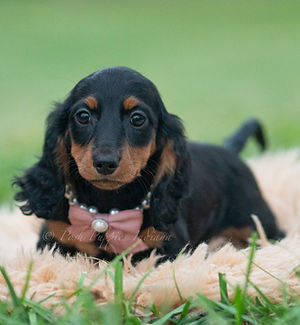
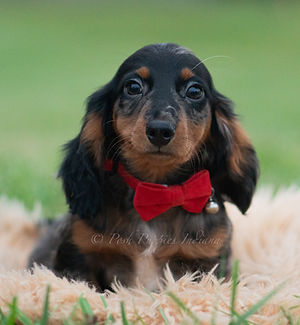
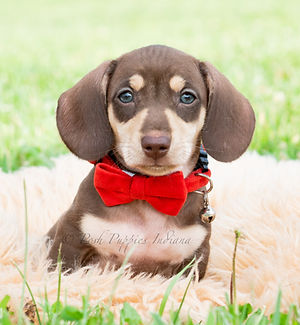
View our adoptable miniature dachshund puppies for sale in Indiana below!






Mini Dachshund FAQs
You should prepare a budget of $1,500 to $3,000 to get a Mini Dachshund puppy from a reputable breeder. The beloved doxie, weiner dog, sausage dog (or whatever name you like to call them by) are a very popular breed and are bred in a variety of coat types and colors, which are all price factors.
Specialty lines including English Cream, Isabella, and longhaired varieties can push toward $3,500 from dedicated show-quality programs. You may find listings on aggregator sites in the $650 to $1,200 range as well, but lower prices often indicate a less involved breeder or possible scam.
Indiana has a strong local Dachshund breeding community, which means buyers have different options for finding a Mini Dachshund puppy, making it even more important that they choose the right breeder. Choosing a breeder investing in OFA health certifications and careful pair selection before producing a litter, like Posh Puppies Indiana, is the wiser choice.
Most potential Doxie owners ask this question, and the honest answer involves one official standard and one beloved community term. The AKC recognizes two sizes: Miniature Dachshunds and Standard Dachshunds.
Miniature Dachshunds weigh 11 pounds or under snd stand 5 to 7 inches at the shoulder. Standard Dachshunds weigh between 16 and 32 pounds and stand 8 to 9 inches tall. That gap between 11 and 16 pounds is what the Dachshund community casually call a "tweenie." The AKC doesn't officially classify tweenie Doxens, but when a breeder tells you a puppy may mature into a tweenie, they're being transparent.
Nevertheless, the size of you Dachshund doesn't change the personality of the breed. The Dachshund temperament is known to be bold, curious, fiercely loyal, famously stubborn, and loudly opinionated. Both minis and standards are the same genetic breed in a slightly different size.
The practical differences: Miniatures are better suited to smaller spaces and apartment living, tire a bit more quickly on walks (which can actually work in your favor from a back-health perspective), and are more physically fragile around rough handling or young children. Standards are sturdier, require slightly more physical exercise, and can hold their own in a more active household. A tweenie sits comfortably in the middle of both worlds.
From a health perspective, this is the most important thing a prospective Dachshund owner can understand before bringing one home. IVDD stands for Intervertebral Disc Disease. Between every vertebra in your dog's spine sits a cushioning disc which acts as a small shock absorber. In Dachshunds, a genetic mutation called chondrodystrophy (CDDY) causes those discs to calcify and harden at a far younger age than in other breeds. Hardened discs lose their ability to flex and absorb impact. One wrong jump off the couch or down the steps can cause a disc to rupture upward into the spinal canal, compressing the spinal cord. The result ranges from sudden back pain and yelping, to partial weakness in the rear legs, to complete paralysis. Cornell University estimates that Dachshunds alone account for 40 to 75 percent of all IVDD cases in dogs. About 1 in 4 Dachshunds will experience a clinically significant back episode during their lifetime.
We cannot breed IVDD entirely out of a Dachshund because there is the gene that causes their short-legged body shape and the gene that increases disc disease risk are linked. But you can reduce risk substantially through how you set up your home and how you manage your Doxie's daily life.
Ramps are better for Dachshunds than stairs. You can buy a small doggy ramp to help your Dachshund onto the couch, the bed, and any favorite elevated area. Jumping down from furniture is among the most common triggers for disc events.
Harnesses provide better support than collars. A collar focuses all leash tension on the neck and cervical spine. A step-in harness distributes that load across the chest and shoulders.
Weight management is very important for long-bodied dogs like Dachshunds. Every extra pound your wiener dog carries adds disproportionate load to their long, low spine. Lean Dachshunds have significantly better spinal health. A visible waistline when you look down at your doxie is the target
Practice safe, careful lifting when helping your Dachshund into the car or from one room to another.. Always support the chest and the hindquarters simultaneously. Never let a Dachshund hang unsupported and make sure every member of your household, especially children, knows how to pick them up correctly.
Daily low-impact exercise. Leash walks are beneficial and safe. However, strenuous running, games that cause your Doxen to jump, rough wrestling with larger dogs, and prolonged stair climbing are not. Muscle strength protects the spine, but high-impact activities risk it.
At Posh Puppies Indiana, we are highly in tune with the needs and requirements of the Dachshund breed. Each puppy is handled with the utmost care and we are eager to help you prepare for the joy of home full of Dachshund love.
Few small breeds offer as much variety as Dachshunds. This breed comes in three distinct coat types and a sweeping range of colors and patterns. The three coat types are smooth (short-haired), longhaired, and wirehaired. Smooth-coated Dachshunds are the most common and require less grooming, such as a weekly brush, occasional bath, and basic ear cleaning. Longhaired Dachshunds have a silky, flowing coat with feathering on the ears, chest, belly, and tail that gives them an elegant, softer look. They should be brushed a few times during the week to prevent tangles, and professional grooming every 2-4 months. Wirehaired Dachshunds have a dense, rough outer coat with a distinctive beard and eyebrows that give them a terrier-like expression. They are more common in Germany and less common in the United States.
Regarding color:, the base coat can be solid red or cream, bicolor black and tan, chocolate and tan, blue and tan, or Isabella and tan (Isabella is a rarer dilute fawn-chocolate color with a warm lavender hue that often results in higher pricing.
Dachshund coat patterns include brindle (dark stripes over a base color), piebald (large white patches over a dark base), sable (red base with black overlay), and dapple. Dapple Dachshunds carry the merle gene and display patches and swirls of lighter color over a darker base coat.
One dapple parent producing dapple puppies is fine, but two dapple parents bred together can be a serious problem. This is called "double dapple" and it is the one color no breeder should breed for. When both parents carry the dapple gene and pass it on to a puppy, the puppies may incur vision impairment, hearing loss, malformed or absent eyes, partial or full blindness, or full deafness. The Dachshund Club of America removed the term "double dapple" from the breed standard in 2007, discouraging the practice entirely. If a breeder is offering puppies from two dapple parents, you should be highly cautious.
Posh Puppies Indiana breeds for classic coat types, and standard and exotic color genetics. We're direct with every buyer about exactly what they're getting.
The Dachshund was bred in Germany to hunt badgers, and after 700 years of selective breeding, they are still known for their courage, tenacity, independence, and problem-solving skills. Dachshunds are fearless dogs who sometimes forget how small they really are.
They are deeply affectionate and loyal to their humans, and they can have clownish, entertaining behaviors at times. That being said, Doxens can also be stubborn in a way that surprises first-time owners who assume a small dog will be easy to train. A Dachshund can absolutely learn commands, but they have the final say if they want to obey or not. Doxies have been described as "too smart for their own good." Positive reinforcement and food motivation work with Dachshunds. Harsh corrections do not and they could make a Dachshund less cooperative.
Vocally: expect a big bark from a small dog. They are alert watchdogs who take their surveillance duties seriously and will be sure to tell you about the mailman, neighborhood squirrels, guests, and sounds from two houses over. Consistent training from puppyhood can help manage their barking tendencies.
Most Dachshunds do well with children of all ages. Older and younger children alike should be taught how to handle a long-backed dog carefully. Never grab, squeeze, or roughhouse too much or you will risk injuring the dog's spine and provoking it to snap in self-defense. Early socialization is important for both sides of that equation.
If you have other pets, you should remember that Dachshunds have strong prey drive. Doxens do better with friends their own size (or bigger), and small animals like rabbits, hamsters, and guinea pigs are not recommended housemates. Most Dachshunds coexist well with other dogs and cats.
For the owner who is ready to be patient, consistent, and genuinely charmed by a dog who thinks rules are suggestions, there is no more devoted, characterful companion in the toy or hound world.
Yes, Dachshunds are a good breed for apartment-living, although they can truly thrive in just about any living situation. They are compact in size and have low-to-moderate energy levels. This fun-size breed is perfectly content with two short daily walks plus indoor play. While they don't need a yard, they do like to adventure and sniff around in the grass; just keep an eye on them in case they want to chase an animal or find a place to start digging.
If you live in an apartment above the ground floor and stairs are part of your daily routine, then remember that repeated stair climbing isn't ideal for any weiner dog's long-term spinal health. If stairs are unavoidable, the practical solution is carrying your Doxen up and down the steps to protect their legs and spine from overuse. Many apartment-dwelling Dachshund owners simply carry them in and out of the building and use their stairs only minimally.
Standard Dachshunds, Tweenie Dachshunds and Miniature Dachshunds are one of the longer-living dog breeds available. Their average lifespan is 12 to 16 years, with well-cared-for dogs able to reach their late teens. Their longevity is one of the breed's most appealing qualities for committed owners A Dachshund from parents with proper OFA screening is a dog you're potentially sharing 15+ years of life with.
bottom of page